related blog
%20(3).svg)
11
Why Contractors Need Photo Documentation Tools
Timestamped, GPS-tagged photo tools help contractors avoid disputes, cut rework and delays, speed billing, and improve team communication.
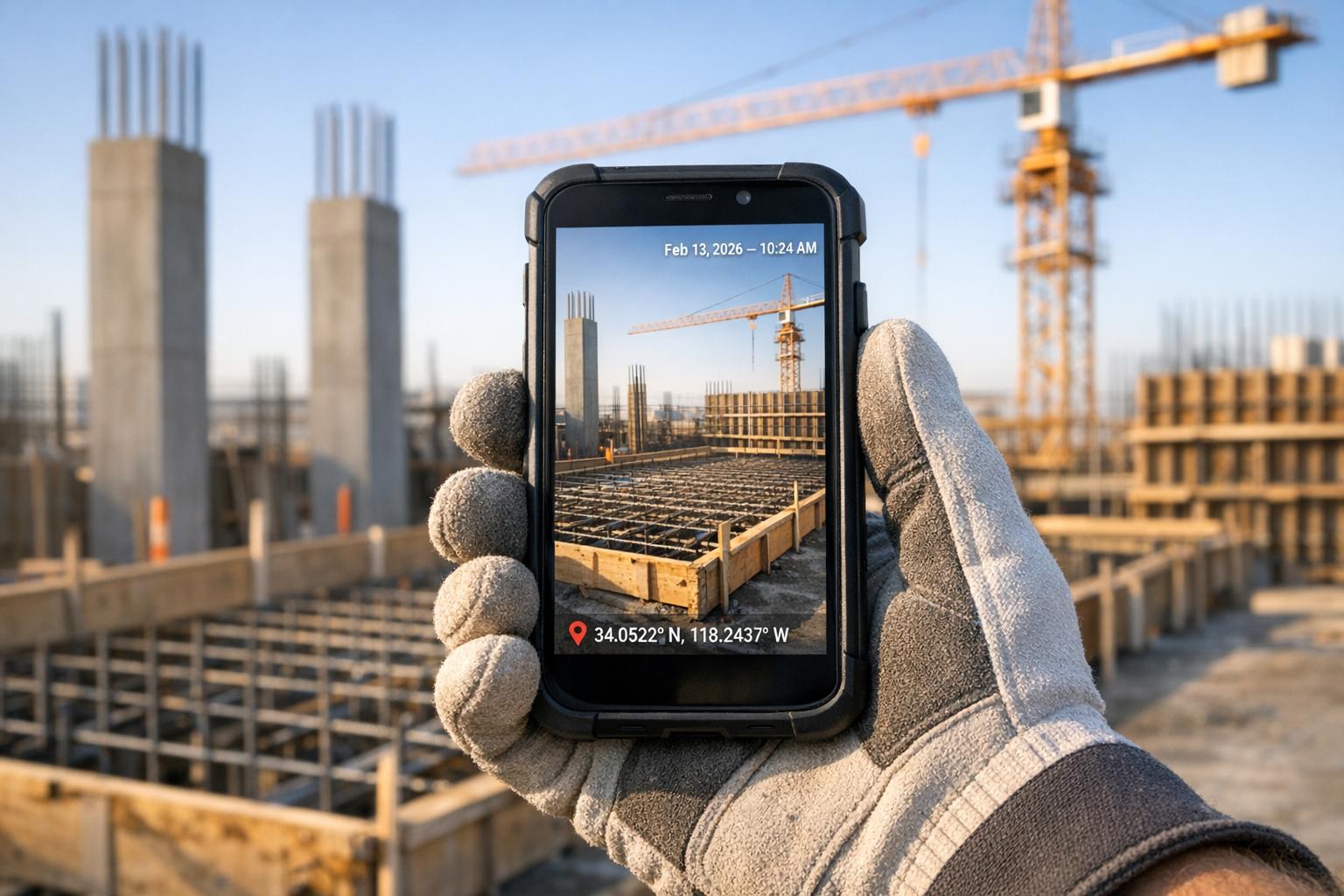
Contractors face frequent challenges like client disputes, delays, and insurance complications, often due to poor documentation. Photo documentation tools solve these problems by providing organized, time-stamped, and GPS-tagged records that streamline workflows, reduce rework, and protect against liability.
Key Takeaways:
- 92% of firms resolve disputes faster with systematic photo documentation.
- Poor documentation can increase project delays by 31% and administrative costs by 40%.
- Tools like CrewCam centralize records, improve communication, and reduce errors.

Impact of Photo Documentation on Construction Projects: Key Statistics
The Risks of Poor Jobsite Documentation
Liability Exposure from Missing Records
Without proper photo records, contractors face serious legal and financial risks. Missing documentation makes it harder to defend against disputes over site conditions, workmanship, or compliance issues. In some cases, insurance companies may even reject claims if there's no evidence to back them up.
The problem isn’t limited to one-off disagreements. Hidden issues, like material defects or subpar workmanship, can surface later and lead to costly legal battles. If you don’t have proof of pre-existing conditions or key project milestones, you’re left vulnerable to false claims. Time-stamped photos provide a reliable timeline, shielding you from "he said, she said" scenarios and offering clear legal protection when it matters most.
Workflow Delays and Expensive Rework
Disorganized or incomplete documentation can wreak havoc on your project’s workflow. When photos are scattered or missing, teams waste time searching for files, making extra site visits, and slowing down decision-making. Poor documentation has been linked to a 31% increase in project delays and a 40% spike in administrative costs.
The stakes get even higher when undetected problems lead to rework. For instance, unnoticed quality issues or design deviations that are later hidden behind drywall or concrete can result in hefty expenses. Regular photo documentation allows teams to catch these problems early, potentially cutting rework costs by 25% and identifying issues weeks ahead of traditional inspections. These inefficiencies not only delay progress but also make disputes harder to resolve, adding to the overall project strain.
Difficulties in Dispute Resolution
Inadequate photo records make resolving disputes far more challenging and time-consuming. Without visual evidence, disagreements over site conditions, work progress, or weather-related impacts can drag on for weeks instead of days. Contractors without proper documentation find it difficult to present solid proof, which leads to prolonged arguments that could have been avoided with clear, time-stamped photos.
The problem becomes even more pronounced during audits or insurance claims. Poorly organized records make it nearly impossible to demonstrate compliance or verify conditions at specific points in time. On the other hand, location-tagged photos provide undeniable evidence, cutting through disputes and ensuring clarity when it’s needed most.
sbb-itb-5f4c686
Transparency with Your Build Projects Using Photo Documentation | with Brian Altus
How Photo Documentation Tools Address These Problems
Photo documentation tools are designed to tackle the chaos of missing or disorganized records. Instead of relying on scattered phone photos, these tools automatically capture important metadata and store all visual data in a single, easy-to-access location.
This shift solves a major issue: field teams waste an average of 13 hours per week searching for project data when photos and records are poorly organized. This inefficiency slows down decision-making and billing processes. Modern tools eliminate these delays by offering instant access to timestamped, location-verified records that team members can view and update in real time.
GPS and Time-Stamped Photos for Accurate Records
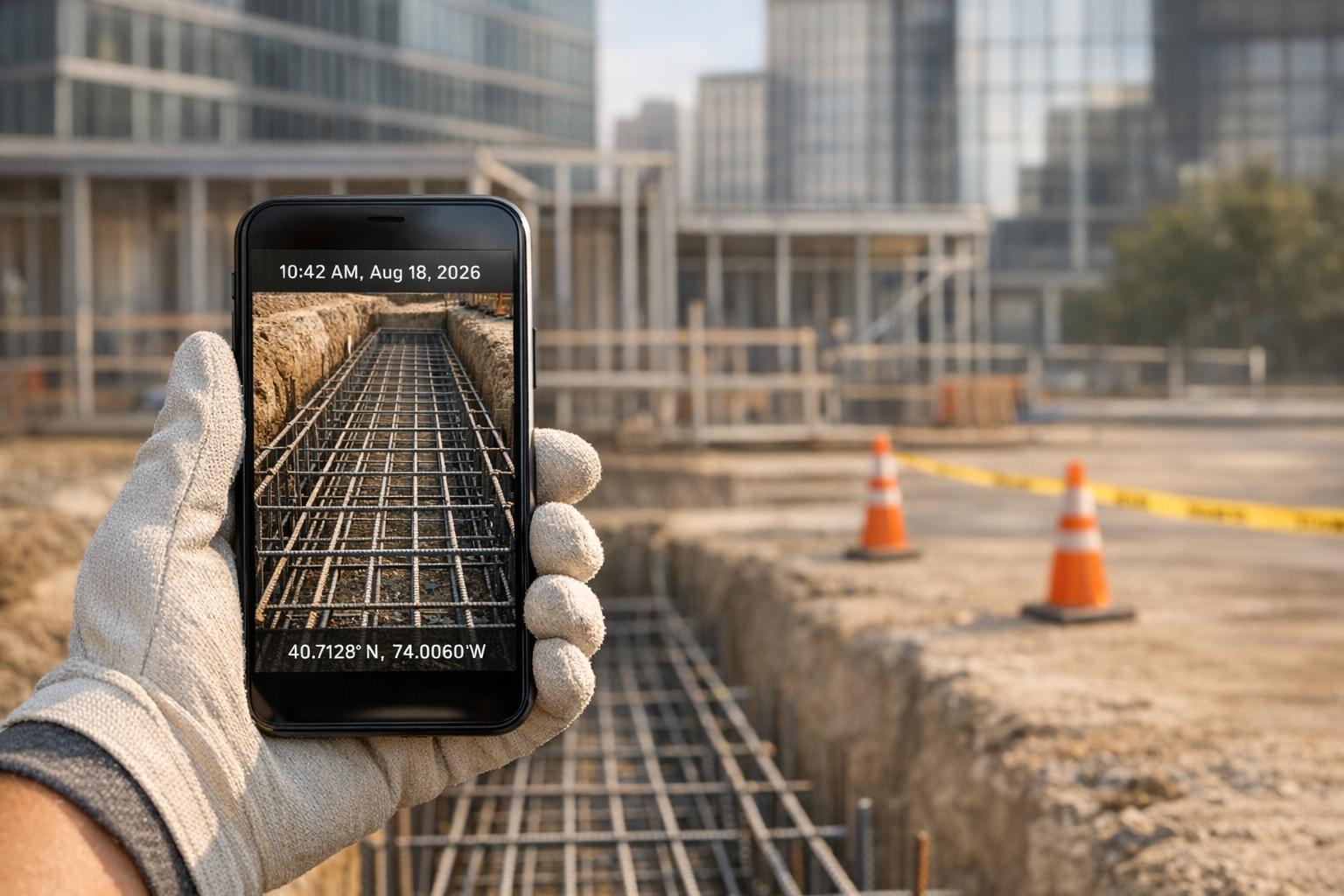
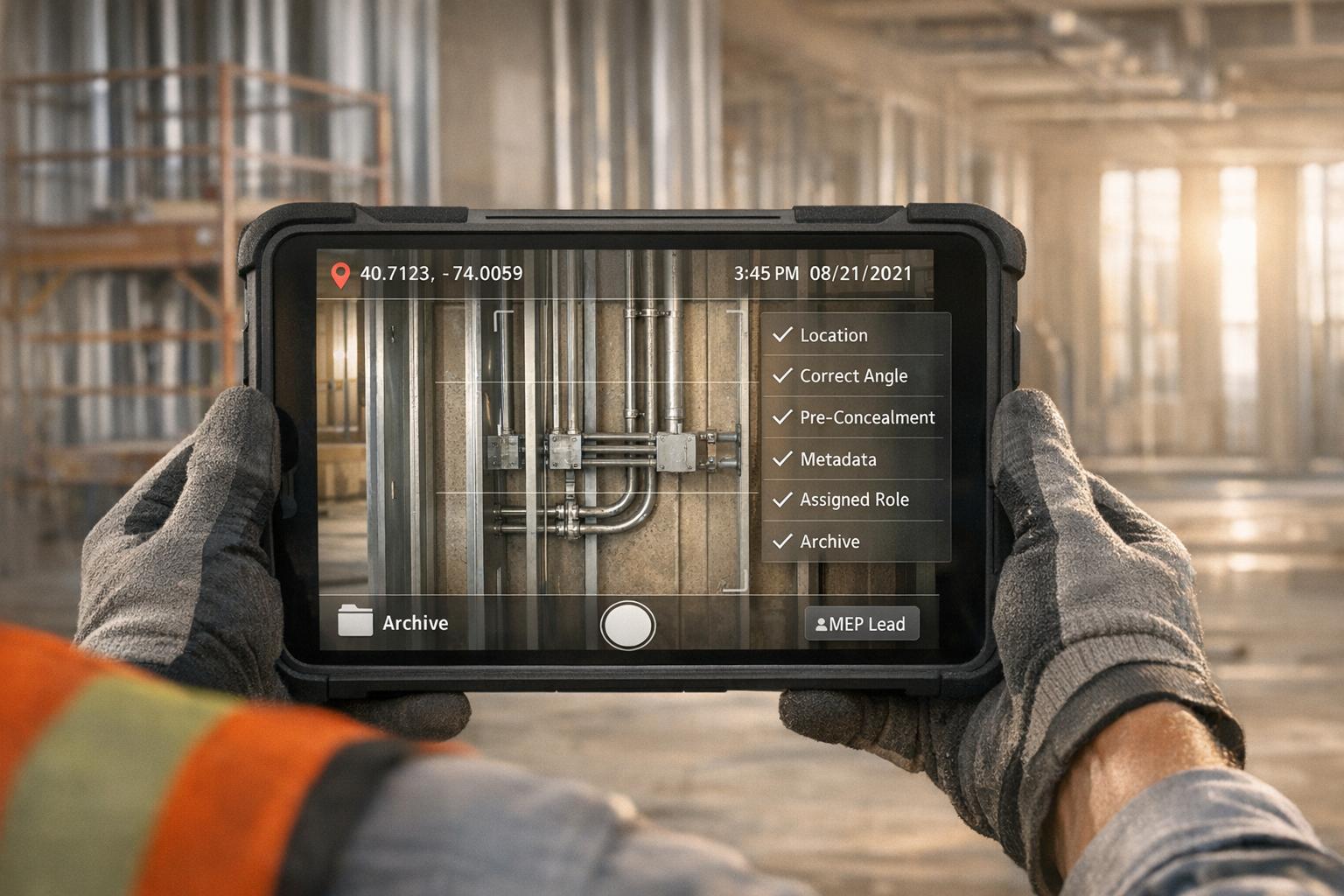
By automatically capturing metadata, these tools create a solid and indisputable audit trail. For example, platforms like CrewCam tag each photo with the exact date, time, and GPS coordinates, ensuring legally reliable documentation without extra effort. This data serves as irrefutable evidence in disputes over liability, damage, or scheduling.
The benefits are clear in everyday situations. Contractors rely on timestamped photos to document concealed work - like rebar placement, plumbing installations, or electrical conduits - before they're covered by concrete or drywall. These records also support payment applications and speed up billing. If a client questions whether work was completed before a storm, these real-time records can instantly resolve the issue.
Some platforms even allow custom watermarks, embedding details like your company logo, project name, and GPS coordinates directly onto photos. This professional touch happens automatically, removing the risk of human error or forgotten details. These features not only validate work but also provide strong protection against liability claims.
Better Team Collaboration
Real-time uploads and cloud syncing ensure everyone stays on the same page without endless phone calls or site visits. When field crews upload photos that instantly sync to a centralized system, project managers and office staff can monitor progress, spot issues, and make decisions from anywhere. This reduces the need for constant onsite communication and cuts down on misunderstandings that often delay projects.
Accountability is another major advantage. GPS geotagging and time-stamping verify exactly when and where work was done, creating a chronological record that tracks who did what and when. This transparency keeps team members focused and ensures clear documentation if questions arise later.
As Ev Howard, Senior Project Manager, shared: "I can't tell you how many times your photos have saved the day when figuring out what was done so many months earlier".
Sharing curated photo sets with clients builds trust by providing clear evidence of progress.
Kyle McClelland, Redevelopment Project Director, put it this way: "For us, it's a no-brainer to have an unbiased independent party creating a comprehensive photographic record of construction progress".
This level of openness strengthens client relationships without requiring constant site visits. It also naturally leads to smoother task management and better communication.
Improved Task Management and Communication
On-photo annotations simplify communication by letting field staff mark photos with arrows and text, cutting down on lengthy email exchanges. These visual notes ensure the context behind a photo is always clear, reducing unnecessary back-and-forth.
Regular photo reviews help project managers catch quality or safety issues early, ensuring work meets requirements before moving to the next phase. This proactive approach prevents costly rework and keeps projects on track. Features like standardized folders, tags, and live feed checklists make it easy to access the latest project data without digging through disorganized files.
For jobsites with limited connectivity, offline mode is a game-changer. Teams can capture photos in remote locations, and the data syncs automatically once they're back online. This ensures uninterrupted documentation, reducing delays and maintaining accountability throughout every phase of the project.
Key Features of CrewCam That Reduce Liability and Improve Efficiency

CrewCam takes the benefits of photo documentation and pushes them further, offering tools that not only reduce liability but also streamline workflows. By centralizing all jobsite images into a secure and organized system, it tackles common pain points that lead to inefficiencies and legal risks.
Unlimited Cloud Storage and Project Organization
Say goodbye to storage headaches. CrewCam provides unlimited cloud storage for all jobsite photos and videos, ensuring contractors never have to worry about running out of space or paying extra fees. From preconstruction snapshots to final inspections, every image is securely stored and accessible indefinitely. Each photo is automatically sorted into project-specific folders, complete with GPS coordinates, date, and time stamps, creating a thorough and reliable record that’s invaluable for audits or resolving disputes.
This level of organization isn’t just convenient - it’s impactful. Construction firms that use systematic photo documentation report resolving disputes 92% faster and cutting administrative costs by 40%. With CrewCam, there’s no need for manual renaming or sorting, reducing errors and saving time. Plus, when inspectors, insurers, or OSHA officials need specific images, they can find them instantly without wading through unrelated files. This streamlined data management also improves communication, paving the way for real-time updates.
Sharable Photo Galleries and Real-Time Feeds
CrewCam doesn’t stop at organization - it also enhances transparency and collaboration. The live project feed keeps everyone on the same page without endless phone calls or site visits. As field crews upload photos, they instantly sync across devices, allowing project managers to address issues and make decisions from anywhere. Need to update clients or stakeholders? The sharable photo gallery lets you select specific images and send them via external links, offering clear progress updates that build trust.
This real-time visibility transforms how teams communicate. Industry data shows that centralized photo feeds reduce stakeholder communication time by 60% and cut documentation disputes by 85%. Guest collaborators, like subcontractors or architects, can be added without granting full system access, making it easy to involve the right people at the right time. Annotated photos also speed up approvals and payments by showing clients exactly what’s been completed, eliminating unnecessary back-and-forth.
Offline Mode and HD Photo Capture
For remote jobsites with unreliable internet, CrewCam’s offline mode ensures no documentation gaps. It captures GPS and time-stamped HD photos even without a connection, syncing automatically once the internet is restored. This guarantees uninterrupted records, no matter where the jobsite is located.
The HD photo capture feature is more than just high resolution - it’s a tool for precision. These crystal-clear images reveal details that standard phone cameras might miss, such as material flaws, installation errors, or potential safety hazards. Teams can annotate photos and complete checklists offline, ensuring tasks are verified before moving on to the next phase. By catching issues early, this feature helps avoid costly rework and ensures compliance with detailed, high-quality visuals.
The Business Value of Photo Documentation Tools
Systematic photo documentation isn’t just about mitigating risks - it delivers clear financial advantages. Contractors who embrace these tools often see improvements across their operations, from cutting down on costly rework to building stronger client relationships.
Less Rework and Faster Dispute Resolution
When field teams capture every stage of a project with clear, time-stamped photos, they can catch issues - like material defects or installation errors - before they’re covered up by drywall or finishes. This visual evidence enables quick fixes, avoiding expensive tear-downs later. Time-stamped images also make resolving disputes faster and less costly, as they provide indisputable proof to settle disagreements.
Here’s a telling stat: 92% of construction firms report faster dispute resolution when using systematic photo documentation. These photos, often enhanced with GPS data, turn subjective arguments into hard facts, protecting contractors from false claims while supporting valid ones.
Tools like CrewCam simplify this process by automatically organizing images, making them easy to access. For example, if a client questions whether work was completed on time or an inspector asks for proof of compliance, contractors can retrieve the exact photo in seconds - no need to sift through thousands of unsorted pictures. This speed is critical when project delays can quickly rack up costs.
Better Communication and Team Accountability
Photo documentation also transforms team collaboration. When everyone uploads images to a centralized platform like CrewCam, the live project feed and annotation features keep field crews, project managers, and office staff aligned in real time. This eliminates the need for excessive back-and-forth communication, which often slows projects down.
Each photo includes a digital signature showing who took it, when, and where, fostering transparency and accountability. The results speak for themselves: stakeholder communication time drops by 60% when teams use centralized visual tools. Managers can review annotated photos and provide feedback directly, while subcontractors can quickly understand expectations without lengthy discussions. This streamlined approach reduces misunderstandings and speeds up decision-making.
Fewer Jobsite Visits and Stronger Client Relationships
Remote monitoring has changed how project management works. With features like CrewCam's sharable photo galleries and external project links, owners, architects, and clients can track progress remotely. Instead of multiple weekly site visits, they can conduct virtual walkthroughs using high-quality images. This convenience reduces documentation disputes by 85%, as everyone can see the same visual evidence.
Providing regular photo updates - whether weekly or at key milestones - also builds trust. Tangible progress photos reassure clients, speeding up payment cycles. For instance, invoices that include images tied to specific tasks or milestones are processed faster because there’s no ambiguity about what’s been completed. CrewCam even links photos directly to checklists and billing milestones, streamlining approvals and freeing contractors to focus on their work instead of chasing payments.
In short, these tools don’t just protect your projects - they improve efficiency and strengthen relationships, making them a smart investment for any contractor.
Conclusion: Why Contractors Should Invest in Photo Documentation Tools
Relying on random phone pictures just doesn’t cut it in today’s construction world. Contractors sticking to outdated documentation methods risk greater liability, unnecessary delays, and costly disputes that can eat into profits. Here’s a key insight: 92% of construction firms resolve disputes faster when they use systematic photo documentation, and proper visual records help cut down both delays and expenses.
Modern digital tools are stepping in to replace old methods with accuracy and ease. Take CrewCam, for example - it transforms jobsite photos into powerful assets. With GPS and time-stamped images, contractors can create legally solid records to counter false claims. Features like real-time updates, on-photo annotations, and sharable galleries keep everyone - from teams to clients - on the same page. This means fewer misunderstandings, less rework, and stronger relationships across the board.
Moving from manual processes to integrated digital workflows isn’t just a passing phase - it’s quickly becoming the norm for contractors aiming to stay ahead. When you can clearly prove what happened, when it happened, and who was responsible, you eliminate the guesswork that often leads to disputes. This level of transparency not only builds trust with clients but also speeds up payments and minimizes the need for frequent site visits.
"Effective photo documentation is a cornerstone of successful construction project management." - Brandon Thompson, Research & Customer Success Specialist, CrewCam
In short, adopting a tool like CrewCam protects your business while simplifying operations. By cutting liability, improving communication, and consolidating records, the right system essentially pays for itself. With time saved, disputes avoided, and clients happier, investing in a solution like CrewCam is a smart move for any contractor.
FAQs
What photos should I take on a jobsite?
Capture photos that document every stage of your project. Focus on pre-construction site conditions, ongoing work, key project phases, safety concerns, and final inspections. To keep everything organized and reliable, make sure your photos are timestamped, geotagged, and neatly sorted. This will ensure accurate records and make referencing them later a breeze.
Are time- and GPS-stamped photos reliable in disputes?
Time- and GPS-stamped photos are an excellent way to provide solid evidence of work, location, and timing. These details can serve as verifiable proof, which is especially important in legal or contractual situations. Their reliability makes them a trusted tool for resolving disputes effectively.
How do crews use photo tools with no cell service?
Crews can rely on photo documentation tools even in areas without cell service by using offline access features. For example, apps like CrewCam let users capture and store photos and videos directly on their devices. When an internet connection becomes available, the media uploads automatically to the cloud. This approach ensures you have accurate, timestamped, and geo-tagged records, even in locations with limited or no connectivity.
Related Blog Posts

See CrewCam in action
Start your free trial now by clicking the button below


Wanna chat or demo?
Questions? Concerns? Requests? Talk to a real human

Watch a CrewCam demo now 😎
Short on time, busy, got jobs to do? See how CrewCam works now!